
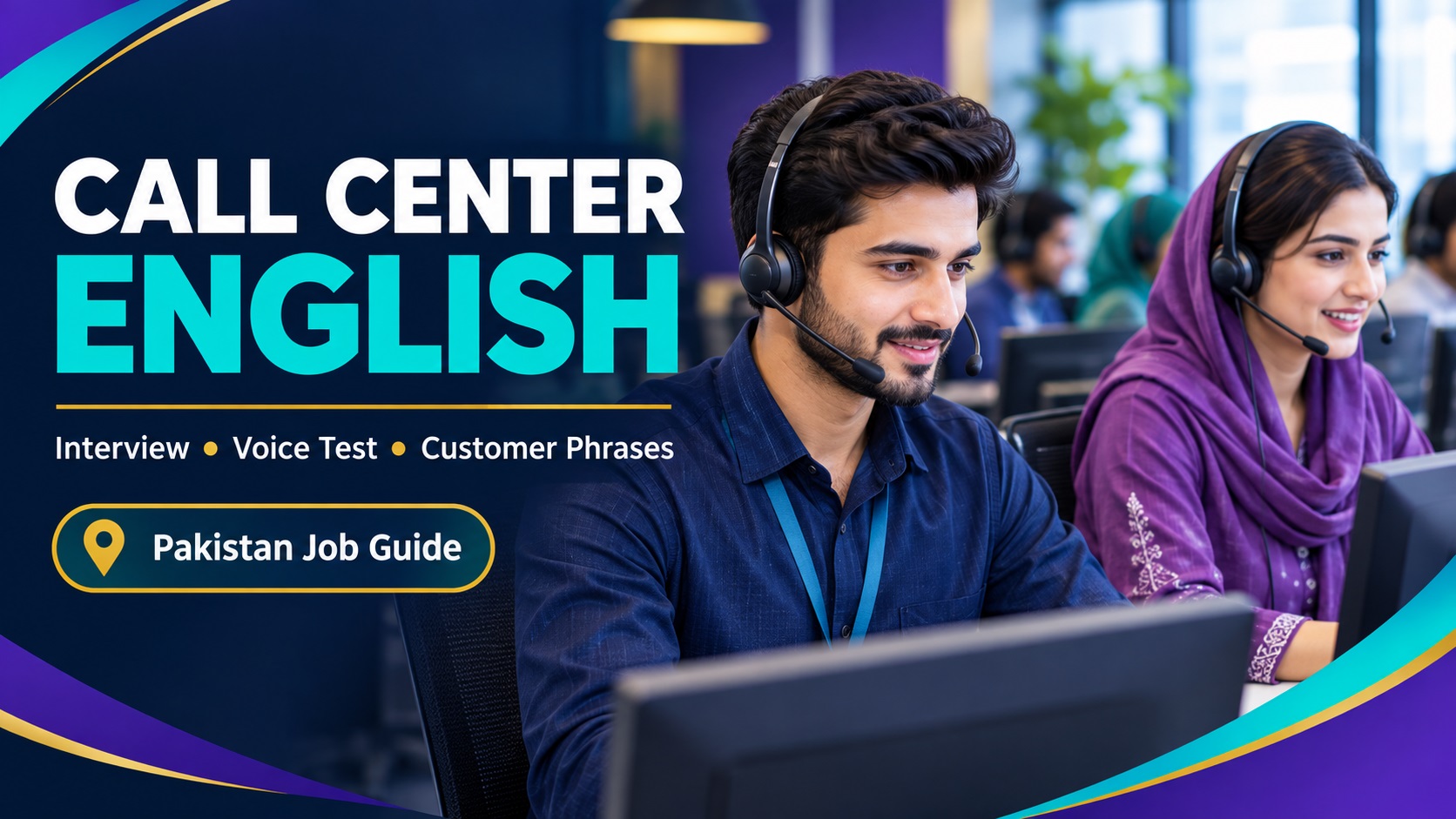
Good English can improve your chances of qualifying for customer-service and BPO positions, but preparing for a call centre interview requires more than memorising difficult words. Recruiters normally want to know whether you can listen carefully, speak clearly, follow instructions and remain polite under pressure.
This guide to English for call center jobs in Pakistan will help you prepare for an interview, record a short voice sample and communicate professionally with customers. It includes model answers, practical phrases, role plays and a seven-day practice plan.
Important: English ability alone does not guarantee employment. Hiring decisions may also depend on your education, computer skills, work experience, availability, location and the employer’s requirements.
Call Centre or Call Center: Which Spelling Is Correct?
Both spellings are correct:
- Call centre is the standard British spelling commonly used in Pakistan.
- Call center is the American spelling and is frequently used in job advertisements and online searches.
This article uses both versions because Pakistani employers and applicants commonly use both.
What English Skills Do Call Centre Jobs Require?
You do not need to imitate a British or American accent. However, customers should be able to understand you without repeatedly asking you to speak again.
For most inbound, outbound and customer-support roles, recruiters may assess the following abilities:
- Speaking clearly at a comfortable speed
- Listening without interrupting
- Understanding questions and instructions
- Giving accurate and organised information
- Using polite and professional language
- Handling complaints without becoming defensive
- Reading a script naturally
- Typing and using basic computer software
- Working in evening or night shifts when required
- Maintaining a calm tone during difficult calls
Your pronunciation does not have to be perfect. Clear speech, correct information and respectful behaviour are usually more useful than a forced foreign accent.
How to Prepare a 60-Second Call Center Voice Sample
Some employers ask applicants to submit a voice note before inviting them for an interview. This helps the recruiter assess clarity, fluency, confidence, pronunciation and background noise.
A simple voice sample can follow this structure:
- State your name and city.
- Mention your education or recent experience.
- Describe two relevant strengths.
- Explain why you are interested in the position.
- Close politely.
Sample 60-Second Voice Introduction
Hello, my name is Ahmed Khan, and I am from Lahore. I recently completed my bachelor’s degree in commerce. During my studies, I developed strong communication, computer and problem-solving skills. I can listen patiently, explain information clearly and remain calm when dealing with a difficult situation. I am interested in customer service because I enjoy communicating with people and helping them find solutions. Although I am at the beginning of my professional career, I am willing to learn, accept feedback and follow company procedures. I am also comfortable working in rotational shifts. Thank you for considering my application.
Voice-Sample Tips
- Record in a quiet room.
- Keep the microphone a comfortable distance from your mouth.
- Speak naturally instead of shouting.
- Use short sentences.
- Pause briefly between ideas.
- Avoid speaking too quickly.
- Do not add unnecessary family details.
- Do not claim experience or skills you do not have.
- Listen to the recording before submitting it.
- Follow the recruiter’s requested length and format.
If you struggle to organise your opening answer, read our guide to self-introduction in English.
10 Call Center Interview Questions and Sample Answers
Use these answers as models rather than scripts. Change the details so that every answer remains honest and relevant to your background.
1. Tell Me About Yourself
What the interviewer wants: A short, professional summary of your education, experience and suitability for the role.
Sample answer:
My name is Sana, and I am from Rawalpindi. I have completed my bachelor’s degree and have experience dealing with students at an educational institute. That role helped me improve my communication, record-keeping and problem-solving skills. I am now looking for a customer-service position where I can learn professional call handling and contribute to the organisation.
2. Why Do You Want to Work in a Call Center?
Sample answer:
I am interested in this position because it matches my communication and problem-solving abilities. I enjoy listening to people, understanding their concerns and explaining solutions clearly. I also want to gain professional customer-service experience and develop within a structured organisation.
Avoid answering only, “I need money.” Earning an income is a reasonable goal, but the interviewer also wants to know why you can perform this particular job.
3. What Does Good Customer Service Mean to You?
Sample answer:
Good customer service means listening carefully, understanding the customer’s concern and providing accurate assistance in a respectful way. It also means taking responsibility for the conversation, following company policy and explaining the next step clearly.
4. How Would You Handle an Angry Customer?
Sample answer:
First, I would let the customer explain the problem without interrupting. I would acknowledge the inconvenience and confirm my understanding of the issue. I would then check the available solution according to company policy. If I could not resolve the matter myself, I would explain the next step and transfer or escalate the case appropriately.
5. Can You Work Evening or Night Shifts?
Sample answer if you are available:
Yes, I understand that international campaigns may operate according to different time zones. I am available for night or rotational shifts and can arrange reliable transportation.
Sample answer if you have restrictions:
I am available for evening shifts until 11 p.m. However, I would like to be transparent that I cannot regularly work after that time. I would be happy to discuss whether a suitable shift is available.
Never promise availability that you cannot maintain.
6. What Are Your Strengths?
Sample answer:
My main strengths are patience, active listening and willingness to learn. I do not rush to answer before understanding the question. I also accept feedback and practise areas that need improvement.
7. What Is Your Weakness?
Sample answer:
I sometimes spend too much time checking small details because I want my work to be accurate. I am improving by setting time limits and identifying which tasks require immediate attention.
Choose a genuine but manageable weakness. Explain what you are doing to improve it.
8. Why Should We Hire You?
Sample answer:
You should consider me because I communicate respectfully, learn new procedures quickly and remain calm under pressure. I understand that customer service requires both good speaking and careful listening. If selected, I will follow the company’s processes and work consistently to improve my performance.
9. Do You Have Call Center Experience?
Sample answer for a beginner:
I do not have formal call center experience yet. However, I have practised customer-service conversations and developed communication skills through my education and previous responsibilities. I am comfortable using a computer, receiving feedback and learning scripts. I am ready to complete the required training.
Do not invent experience. Instead, connect your education, volunteer work, shop work, teaching or other responsibilities to the skills required.
10. What Would You Do If You Did Not Know the Answer?
Sample answer:
I would not guess or provide incorrect information. I would tell the customer that I need a moment to verify the details. I would check the appropriate system or ask an authorised colleague. Then I would return with an accurate answer or explain the correct escalation process.
A Simple Structure for Customer-Service Calls
A professional call normally follows a logical sequence. The exact process will depend on the company, campaign and type of customer.
- Open the call: Greet the customer and introduce yourself.
- Verify information: Complete any required security checks.
- Identify the issue: Ask how you can help and listen carefully.
- Clarify: Ask relevant questions and confirm your understanding.
- Provide assistance: Explain the available solution or next step.
- Confirm: Check whether the customer understands the outcome.
- Close: Offer further help and end the call politely.
Essential Call Center English Phrases with Urdu Meaning
Opening a Call
| English phrase | Urdu meaning |
|---|---|
| Thank you for calling ABC Services. | اے بی سی سروسز کو کال کرنے کا شکریہ۔ |
| My name is Ali. How may I help you? | میرا نام علی ہے۔ میں آپ کی کیا مدد کر سکتا ہوں؟ |
| Good morning. You are speaking with Sara. | صبح بخیر۔ آپ سارہ سے بات کر رہے ہیں۔ |
| How can I assist you today? | آج میں آپ کی کیسے مدد کر سکتا ہوں؟ |
Confirming Customer Information
| English phrase | Urdu meaning |
|---|---|
| Could you please confirm your full name? | کیا آپ براہ کرم اپنے پورے نام کی تصدیق کر سکتے ہیں؟ |
| May I have your account number? | کیا مجھے آپ کا اکاؤنٹ نمبر مل سکتا ہے؟ |
| Could you spell your surname for me? | کیا آپ اپنا خاندانی نام ہجے کر سکتے ہیں؟ |
| For security purposes, I need to verify a few details. | حفاظتی مقاصد کے لیے مجھے چند معلومات کی تصدیق کرنی ہے۔ |
| Thank you for confirming that information. | معلومات کی تصدیق کرنے کا شکریہ۔ |
Listening and Clarifying
| English phrase | Urdu meaning |
|---|---|
| Let me make sure I understood correctly. | مجھے تصدیق کرنے دیں کہ میں صحیح سمجھا ہوں۔ |
| Could you please repeat that? | کیا آپ براہ کرم اسے دوبارہ کہہ سکتے ہیں؟ |
| Could you speak a little more slowly? | کیا آپ تھوڑا آہستہ بول سکتے ہیں؟ |
| Did you say fifteen or fifty? | کیا آپ نے پندرہ کہا یا پچاس؟ |
| Could you explain what happened after that? | کیا آپ بتا سکتے ہیں کہ اس کے بعد کیا ہوا؟ |
| If I understand correctly, your order has not arrived. | اگر میں صحیح سمجھا ہوں تو آپ کا آرڈر نہیں پہنچا۔ |
Asking the Customer to Wait
| English phrase | Urdu meaning |
|---|---|
| May I place your call on hold for a moment? | کیا میں آپ کی کال تھوڑی دیر کے لیے ہولڈ پر رکھ سکتا ہوں؟ |
| This may take about two minutes. | اس میں تقریباً دو منٹ لگ سکتے ہیں۔ |
| Thank you for waiting. | انتظار کرنے کا شکریہ۔ |
| I appreciate your patience. | میں آپ کے صبر کی قدر کرتا ہوں۔ |
Explaining a Solution
| English phrase | Urdu meaning |
|---|---|
| Here is what I can do for you. | میں آپ کے لیے یہ کر سکتا ہوں۔ |
| I have updated your information. | میں نے آپ کی معلومات اپ ڈیٹ کر دی ہیں۔ |
| You should receive a confirmation message shortly. | آپ کو جلد تصدیقی پیغام موصول ہو جانا چاہیے۔ |
| The request may take three working days. | اس درخواست میں تین کاروباری دن لگ سکتے ہیں۔ |
| I will explain the next step. | میں اگلا مرحلہ سمجھاتا ہوں۔ |
Handling Complaints
| English phrase | Urdu meaning |
|---|---|
| I am sorry for the inconvenience. | میں اس پریشانی کے لیے معذرت خواہ ہوں۔ |
| I understand why this situation is frustrating. | میں سمجھ سکتا ہوں کہ یہ صورتحال پریشان کن کیوں ہے۔ |
| Thank you for bringing this to our attention. | ہمیں اس مسئلے سے آگاہ کرنے کا شکریہ۔ |
| Let me check the available options. | مجھے دستیاب اختیارات چیک کرنے دیں۔ |
| I will do my best to help within our policy. | میں ہماری پالیسی کے مطابق مدد کرنے کی پوری کوشش کروں گا۔ |
Transferring a Call
| English phrase | Urdu meaning |
|---|---|
| I will connect you with the relevant department. | میں آپ کو متعلقہ شعبے سے ملاتا ہوں۔ |
| May I transfer your call? | کیا میں آپ کی کال منتقل کر سکتا ہوں؟ |
| Please remain on the line while I transfer you. | کال منتقل ہونے تک براہ کرم لائن پر رہیں۔ |
| I will explain the situation to my colleague first. | میں پہلے اپنے ساتھی کو صورتحال سمجھا دوں گا۔ |
Closing a Call
| English phrase | Urdu meaning |
|---|---|
| Is there anything else I can help you with? | کیا میں کسی اور معاملے میں آپ کی مدد کر سکتا ہوں؟ |
| Have I answered all your questions? | کیا میں نے آپ کے تمام سوالات کے جواب دے دیے ہیں؟ |
| Thank you for calling. | کال کرنے کا شکریہ۔ |
| Have a pleasant day. | آپ کا دن خوشگوار گزرے۔ |
How to Handle an Angry Customer Professionally
An upset customer may speak loudly, repeat the complaint or demand an immediate result. Your job is to manage the conversation without arguing or making promises you cannot keep.
Use the LACE Method
- Listen: Allow the customer to explain the concern.
- Acknowledge: Recognise the inconvenience or frustration.
- Clarify: Confirm the facts before offering a solution.
- Explain: State what you can do and what will happen next.
Example Response
I understand why the delay is frustrating, especially because you expected the order yesterday. Let me confirm the tracking details and check the available options. May I place the call on hold for up to two minutes?
Phrases to Avoid
- Calm down.
- That is not my problem.
- You are wrong.
- I already told you.
- There is nothing I can do.
- You need to listen to me.
More Professional Alternatives
- Let us review the available options.
- Allow me to explain the process again.
- I understand your concern.
- This particular request requires assistance from another department.
- Here is what I can do within our policy.
Call Center Role-Play Scripts
Role Play 1: A Delayed Delivery
Agent: Thank you for calling City Store. My name is Hira. How may I help you?
Customer: My order was supposed to arrive yesterday, but I have not received it.
Agent: I am sorry about the delay. Could you please provide your order number?
Customer: It is 45821.
Agent: Thank you. May I place your call on hold for up to two minutes while I check the delivery status?
Customer: Yes.
Agent: Thank you for waiting. The courier has updated the delivery date to tomorrow. I can also send you the tracking link by text message.
Customer: Please send it.
Agent: Certainly. I have sent the link to your registered number. Is there anything else I can help you with?
Role Play 2: Verifying an Account
Agent: Good afternoon. You are speaking with Bilal from ABC Support. How can I assist you?
Customer: I cannot access my account.
Agent: I can help you check that. For security purposes, could you please confirm your full name and registered email address?
Customer: My name is Kamran Shah, and my email is kamran@example.com.
Agent: Thank you for confirming those details. I can see that the account was temporarily locked after several unsuccessful login attempts. I can now send a password-reset link to your registered email.
Role Play 3: Unclear Audio
Customer: I called about my payment on Thursday.
Agent: I am sorry, but the line is unclear. Did you say that you made the payment on Thursday?
Customer: Yes, that is correct.
Agent: Thank you for confirming. Could you please tell me the payment amount?
Role Play 4: Transferring a Customer
Customer: I need to change the address on my insurance policy.
Agent: Address changes are handled by our policy-support team. May I transfer your call to that department?
Customer: Yes, please.
Agent: Certainly. Please remain on the line while I connect you. I will briefly explain your request to my colleague so you do not have to repeat everything.
Pronunciation and Tone Tips for a Call Center Voice Test
Good pronunciation means producing speech that the listener can understand. It does not mean hiding your identity or copying a foreign accent.
1. Pronounce Word Endings
Do not drop the final sound in words such as:
- worked
- called
- asked
- account
- payment
- confirmed
2. Separate Similar Numbers
Practise number pairs that can be confused on calls:
- thirteen and thirty
- fourteen and forty
- fifteen and fifty
- sixteen and sixty
- seventeen and seventy
- eighteen and eighty
When accuracy matters, confirm the number:
Did you say fifteen, one-five, or fifty, five-zero?
3. Stress Important Words
Do not give every word the same weight. Stress the important information:
Your order will arrive on Tuesday afternoon.
4. Avoid Speaking Too Quickly
Fast speech is not the same as fluent speech. Use a steady pace and pause after important information.
5. Keep Your Tone Helpful
A flat tone can sound uninterested, while an aggressive tone can make a complaint worse. Aim for a calm, attentive and confident voice.
If you can understand English but freeze while speaking, see why you understand English but cannot speak fluently.
Common English Mistakes in Call Center Interviews
| Avoid | Use instead |
|---|---|
| I am belong to Lahore. | I belong to Lahore. |
| I have done my graduation. | I have completed my bachelor’s degree. |
| I am working here since two years. | I have been working here for two years. |
| He did not replied. | He did not reply. |
| Kindly revert back. | Please reply. |
| I will explain you. | I will explain it to you. |
| Your good name? | May I have your name, please? |
| What is your problem? | How may I help you? |
| Wait. | May I place your call on hold? |
| My English is weak. | I am actively improving my spoken English. |
Seven-Day Call Center English Practice Plan
Day 1: Prepare Your Introduction
Write a professional introduction of 100 to 120 words. Record it three times and remove unnecessary information.
Day 2: Practise Clear Numbers and Spellings
Read phone numbers, dates, email addresses and account numbers aloud. Practise spelling names using clear letter sounds.
Day 3: Learn Call-Opening and Closing Phrases
Practise five opening phrases and five closing phrases. Record yourself until they sound natural rather than memorised.
Day 4: Practise Active Listening
Listen to a short English recording. Pause it and explain the main point in your own words. Then repeat important details such as names, dates and numbers.
Day 5: Handle a Complaint
Ask a friend to act as an unhappy customer. Listen, acknowledge the concern, clarify the facts and suggest a reasonable next step.
Day 6: Complete a Mock Interview
Answer the ten interview questions in this article without reading the model answers. Keep most answers between 30 and 60 seconds.
Day 7: Record a Complete Mock Call
Record a call that includes a greeting, verification, clarification, solution, confirmation and closing. Listen for unclear pronunciation, filler words and long pauses.
You can also use these daily-use English sentences with Urdu meaning to build confidence before attempting longer conversations.
Call Center Interview Self-Assessment
Before applying, record yourself and answer these questions honestly:
- Can a listener understand my introduction the first time?
- Can I speak for 45 to 60 seconds without reading?
- Do I pronounce numbers clearly?
- Can I ask a customer to repeat something politely?
- Can I explain a simple process in the correct order?
- Can I listen without interrupting?
- Can I remain respectful during a complaint?
- Can I admit when I need to verify information?
- Can I use basic computer and typing skills?
- Have I confirmed my genuine shift availability?
If several answers are “not yet,” continue practising before your interview. Recording and reviewing your own voice is one of the simplest ways to notice recurring problems.
Frequently Asked Questions
Do I need a foreign accent for a call center job in Pakistan?
No. A forced accent is not necessary. Focus on clear pronunciation, listening, appropriate vocabulary and a professional tone. Some international campaigns may provide specific accent or communication training after selection.
Can I get a call center job if my English is not fluent?
Requirements differ between employers and campaigns. Domestic customer-service roles may have different language requirements from international campaigns. If you cannot yet hold a basic conversation, practise speaking and listening before applying.
What should I say in a call center voice note?
Mention your name, education or experience, relevant strengths, interest in the position and availability. Keep the recording focused and follow the recruiter’s requested duration.
How long should my interview answers be?
Most answers can be delivered in 30 to 60 seconds. Questions involving an example or past experience may require a slightly longer answer.
What should I wear to a call center interview?
Wear clean, modest and professional clothing appropriate for the workplace. You do not necessarily need expensive clothes, but your appearance should show that you have taken the interview seriously.
What computer skills may be required?
Useful skills include typing, email, web browsing, basic office software and navigating multiple screens. The employer may train you to use its customer relationship management or calling software.
Should I memorise the answers in this article?
No. Memorised answers can sound unnatural and may create problems when the interviewer asks a follow-up question. Understand the main idea and answer in your own words.
Final Advice for Call Center Job Applicants
Preparing English for call center jobs in Pakistan is not about learning impressive words or copying an accent. It is about communicating clearly, listening carefully and responding professionally.
Start with a short self-introduction. Next, practise the most common interview questions and customer-service phrases. Finally, record complete role plays so that you can evaluate your pace, pronunciation and tone.
Be honest about your experience and availability. If you do not know an answer during a customer call, explain that you will verify the information instead of guessing. Reliability, patience and willingness to learn can be as important as advanced vocabulary.
For structured practice across speaking, listening, grammar and job-related communication, review our English curriculum map.